
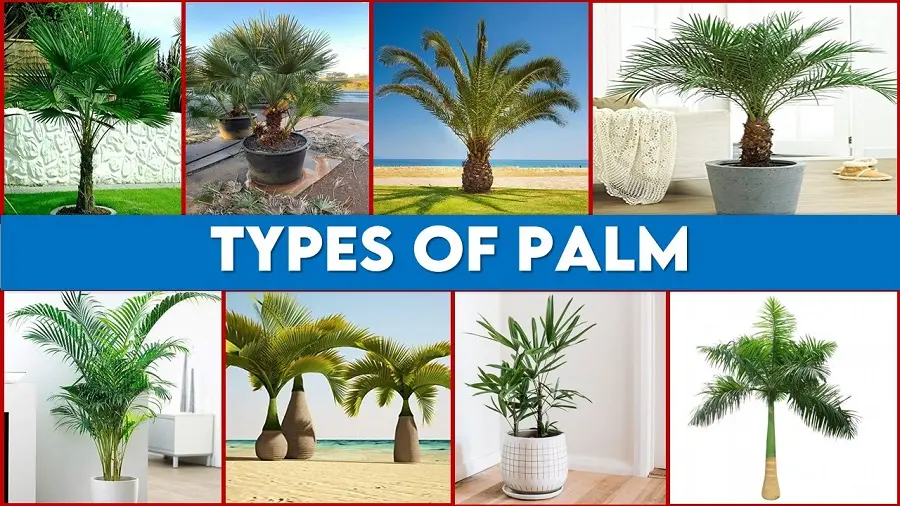
Introduction to Palm Trees
Types of palm trees: Palm trees capture the spirit of the tropics, adding a slice of beauty to any remote setting or garden. Rising trunks, radiant fronds, and beautiful flowers of the palm trees evoke admiration in any garden. Nevertheless, the problem of how to select the ideal palm remains. Whether you want to add a statement piece to a garden or just wish to have a bit of green, there exists a palm that fits. Many of these variations inspire admiration and change a garden into a refreshing retreat.
Popular Types of Palm Trees:
When it comes to palm trees, there is a breathtaking multitude to choose from, and each provides different value to an environment. The Areca Palm is popular for its feathery fronds. With minimal care, it has grown to become a valuable member of a household.
Majestic types of palm trees are particularly known for their herbaceous parts, their island-like atmosphere, and their height. They are commonly found grouped. The shade it provides is a welcome asset to any backyard, along with the coconuts and coconut water the Coconut Palm provides. The Date Palm provides, has been providing, and can still, culturally significant sweet fruits. The Pygmy Date Palm is an equally fitting selection and is larger in compact form.
Areca Palm
The Areca Palm – Dypsis lutescens – is widely used in indoor and outdoor gardens and is known for its beautiful fronds, which capture the attention of and enhance the beauty of spaces. This palm is suited to well-draining soil and receives bright, indirect sunlight. With its humidity-loving feature, it is suited to the tropics or even as an indoor accent.
Areca Palms can reach a height of 6-7 feet when well cared for. They can improve the air quality and thus make the spaces in which they are located healthier. The elegance of the palm is captured in the way the feathery leaves will arch from the main trunk. They can be placed in a cluster or stand alone and improve any garden design by adding a touch of sophisticated simplicity.
– Queen Palm
Syagrus romanzoffiana, informally dubbed the Queen Palm, certainly deserves top billing among the most gorgeous palm trees. As the best palm tree, Queen Palms also remain the taller specimen and make an elegant silhouette as much as 50 feet tall. Finest among the palmQueens, and unlike the rest, this outstanding palm features splendid foliage that droops and refrains in an arch. Such embellishing vistas as provided indicate clearly a region of the palm, such as Western Australia, and aromatic palmations of the Mediterranean.
Full exposure in sunny and warm climates along the coastal northwest and new southern locations, such as having in Queen Palm specimens exhibition of canopy remains the ideal place in the same direct place of the Queen Palm, as very few require maintenance.
For the aesthetic features, the remains exhibited bright orange peduncles, and numerous insectivorous southern as well as nutritious and dry. Exhibition of the southern and western dry climates observed palm as windows of the Queen Palms cities as ceremonial parts of cities, refined and corresponding developments.
– Coconut Palm
Coconut palms are an essential symbol of the tropical variant of a palm and appreciated for their unique Cocos beach. Its palm is also one of the most popular destinations in warm parts of the world. The top of the palm may reach, desiring to mimic its swaying and dancing. Each palm also has a few clusters of coconuts waiting to be harvested, perfect for a beach snack.
Coconut palms grow and thrive in well-drained, warm, dry parts of the world. During empirical studies, the palms are shown to be well adapted to dry, warm, and low-productivity soils; sandy soils are ideal for irrigation. Having an Olive palm boosts the visuals of the entire backyard. The displays are well adapted for decorating the backyard, creating a relaxing shade. The display also boosts the backyard by providing a shed. The palm attempts to deliver both relaxation and shade.
– Date Palm
The Date Palm belongs to the genus Phoenix and is a beautiful specimen within the palm family. Reaching an impressive 75 feet in height, it has long, feathery palm leaves (or fronds), which provide a striking outline to the tree against the sky.
The tree is a native of the Middle East and grows well in areas that have plenty of warm sunlight. It can also be planted in areas that have prolonged dry periods because of its low available moisture tolerance. Beyond its beauty, it has an economically valuable crop that can provide numerous, sweet, and nutritious dates, a staple food for thousands of years.
The Date Palm is a commercially grown crop that can be harvested for the first time after four to five years. As well, it has ideal landscaping qualities that can be used to provide a tropical impression for any garden setting.
– Pygmy Date Palm
Any garden would be graced by the presence of the Pygmy Date Palm. Averaging 4 to 10 feet, these small, sophisticated palms attain a height compatible with small areas and container gardening. Additionally, the palm’s numerous and fronded leaves offer a soft and inviting composure and a relaxed and tranquil atmosphere. The soft and flowing terminal leaves of the Pygmy Date Palm would enhance the appearance of any garden with ease.
For Pygmy Dates, the inability to grow out of condition is just as prominent as the ability to thrive in condition. These palms find home and health satisfaction in both full and partial sunlight. The palms also require less care compared to the larger and more resource-demanding palm varieties. Edible or not, rows of small buds and black fruits will offer a visual of seasonal change. From these blackened fruits, small clumps of yellow flowers will grow outward and enhance the palm’s visual structure.
In practically drawn out landscapes, these palms attain a working composure and serve as a focal point to be enhanced or complemented as desired. Even in tropical arrangements, the beauty and resiliency of the Pygmy Date Palm will be consistent.
How to Choose the Right Type for Your Garden
Selecting the most suitable palm tree type for your garden can be pleasantly interesting. Your first step is to take into account your climate zone. While some palm trees love hot tropics, others prefer colder climates. Next, consider your available space. Bigger varieties like the Coconut palm will require more room for their horizontal leaf arrangements; on the other hand, smaller varieties like the Pygmy Date palm will be suitable for smaller gardens or even pots.
Light availability and quality are other important factors. Is your space getting full sun? Or is it getting some shade? Palm trees can have varying requirements when it comes to sun exposure, and these greatly influence their health and growth. Think of your aesthetic purpose. Is it to have something bold and eye-catching, or something more subdued? Each variety has a different shape and texture, which adds a unique character to the design.
Tips for Growing and Maintaining Palm Trees
Cultivating types of palm trees can be rewarding, but there are specific contexts to consider. Start by identifying spaces with abundant sunlight, for most species thrive in bright indirect light. For palm maintenance, there is a need for moderate watering. Ensure all excess water is disposed of, but do not allow for drying beyond the top 5cm.
Application of fertilizers during the growing season with a balanced blend specific to palms is a sure booster in the growth rate and the outstanding color of palms. Some pests, like spider mites and aphids, may be the most unnoticed. Regular checks and the removal of dying fronds assist in the recognition of a spider mite infestation through improved air circulation.
In periods of temperature extremes, palm trees should be temporary. Cover in winter with frost cloths, and in months of excess heat, removal of excess shade is recommended.
Creative Ways to Use and Decorate with Palm Trees
Transform outdoor landscaping design by introducing palm trees into different design themes. For a mini tropical oasis, group a few different varieties together into a dense arrangement and palm mixture to provide an immersive palm jungle that doubles as an island getaway.
For potted displays on terraces or balconies, consider using smaller varieties as they are movable, and their decorative value increases with social displays.
For indoor spaces, Areca Palms work as natural air cleaners for the living room or near the entryway and help fill the palm void in decorating as well. For a novel night effect, place string lights around the trunk; palms are socially lit by design as well. Along with the decorative value, palm trees should have other landscaping benefits. For example, the combination of flowering plants with palm trees in a social setting should work as a focal point. Use brightly colored landscaping accents with flowering plants to reinforce their impact.
Conclusion
Types of palm trees offer a toned-down variant of paradisiac silhouettes. Moreover, they enrich gardens in multiple ways. With varying designs, almost every garden can accommodate these plants. The regal Areca Palm and the ubiquitous Coconut Palm both provide unique complements to the primary vegetation.
Identifying the optimum palm cultivar is a function of space dimension, climate, and personal taste. Afterward, the palms need to be cared for according to some best practices to allow balance and flow in the space. The palms can also be played with for imaginative value.
Palm trees should provide and continue to provide a tangible decorative value to gardens. Placed correctly, they should provide soothing surroundings.
FAQs:
1. What are the most common types of palm trees?
The most common types of palm trees include Coconut Palm, Date Palm, Areca Palm, and Fan Palm.
2. How many types of palm trees exist worldwide?
There are over 2,500 different types of palm trees found in tropical and subtropical regions.
3. Which types of palm trees grow best indoors?
Popular indoor types of palm trees include the Areca Palm, Parlor Palm, and Kentia Palm.
4. Are all types of palm trees suitable for cold weather?
No, most types of palm trees prefer warm climates, but hardy varieties like the Windmill Palm can tolerate cold.
5. What types of palm trees produce edible fruits?
Date Palms and Coconut Palms are two types of palm trees that produce edible fruits.
6. Do all types of palm trees have the same leaf shape?
No, some types of palm trees have fan-shaped leaves, while others have feather-shaped fronds.
7. Which types of palm trees are best for landscaping?
Popular landscaping types of palm trees include the Queen Palm, Pygmy Date Palm, and Sago Palm.
8. How can I identify different types of palm trees?
You can identify types of palm trees by observing leaf shape, trunk texture, and height.
9. Are there small types of palm trees for gardens?
Yes, small types of palm trees like the Pygmy Date Palm and Lady Palm are perfect for gardens.
10. What are tropical types of palm trees?
Tropical types of palm trees include the Coconut Palm, Royal Palm, and Areca Palm, known for their lush appearance.